Holding One’s Seat

IMG_2471
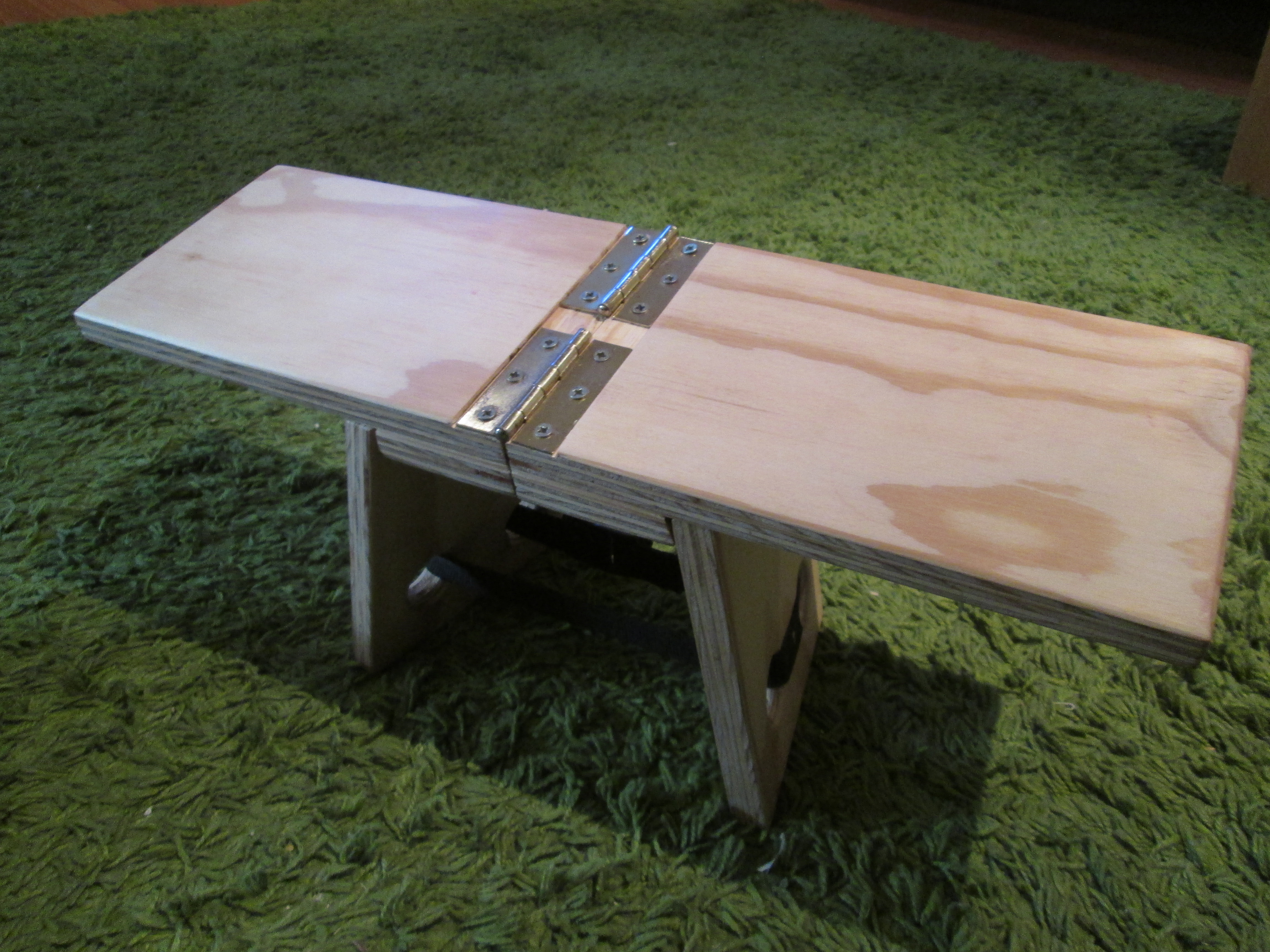
proto-type with folding wooden hinges

Well we manifested the proto-type, followed by a bout of despondency about the design we put the development on hold and entered a fresh and invigorating period of new research.

The focus is still the meditation bench but what changed was that I had the opportunity to use it on an extended retreat , I sat for a very long time and I started to experience a kind of galley–slave-rower bottom,  from sitting on a plank all day for over a week, as Dharma providence would have it I managed to find a piece of high density foam rubber the right size, amongst the pillows and the zafus, the hinge would have become an unbearable obstacle had the covering not been found, so in true Archibald Tuttle (Brazil film 1985) we could not fix the problem but were able to bypass it.

Sam Lowry: Can you fix it?
Harry Tuttle: No, I can’t. But, I can bypass it.

Some other aspects became obvious during those long hours of sitting in the meditation hall dealing with gross sensations, thoughts that arose and dissipated during times of practice were like a test run, the long-hull, the extensive test.

Not to get into what the right- motivation for doing sitting-meditation practice is , one of the important  aspects is the posture that one will need to keep ,an erect and straight spine ( like a pile of golden coins)  and that one will probably need to sit for a very long time ( a couple of life-times depending on the amount of Karma).

Full lotus, on a low cushion is the traditionally suggested method, and seeing somebody siting in that Nobel posture one cannot help but be drawn into inspired admiration, the reality “As It Is, and not as we want it to be” is that most westerners have been sitting on legged chairs .This is acceptable as long as the ones back is kept straight that means not using the back rest which are usually slightly slanted, also one will have to sit at the back of the hall. The main advantage of the low bench meditation is that the seat is at a slight angel which immediately encourages a straight back, this solves that consideration.

The other problem is that with extended hours of sitting no matter what the sitting arrangement is , one will experience discomfort during prolonged sittings.

The discovery that I made during the “test-drive” was that when siting in the kneeling position with the aid of bench support; what becomes of critical importance is the height of the bench in relation to the size of the person using it, and that if the bench is higher it will increase the pressure on the buttocks and as one lowers the height the pressure is pushed on to the knees and going lower on the front of the ankles as the feet are folded back. This distribution of weight is so fine, that I found that adding the height of a folded cloth beneath the bum was enough to adjust the balance of pressure.
ikuko
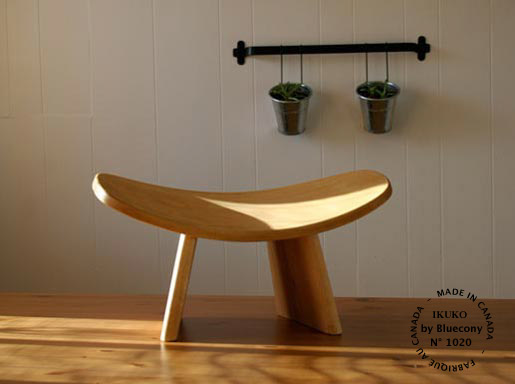
Ikuko bench, very confortable on the bum , with removable legs for easy transport

However, like travelling long distance on a bus or airplane seat, at some point it is useful to realise that no amount of adjustment or movement is going to make things any more comfortable, in my experience it has been best to sit straight and not wiggle too much and usually that is as comfortable as it gets. There are also the guys travelling business class, the guy next to me was using a bench  that seemed so much more comfortable.
Holding One’s Seat

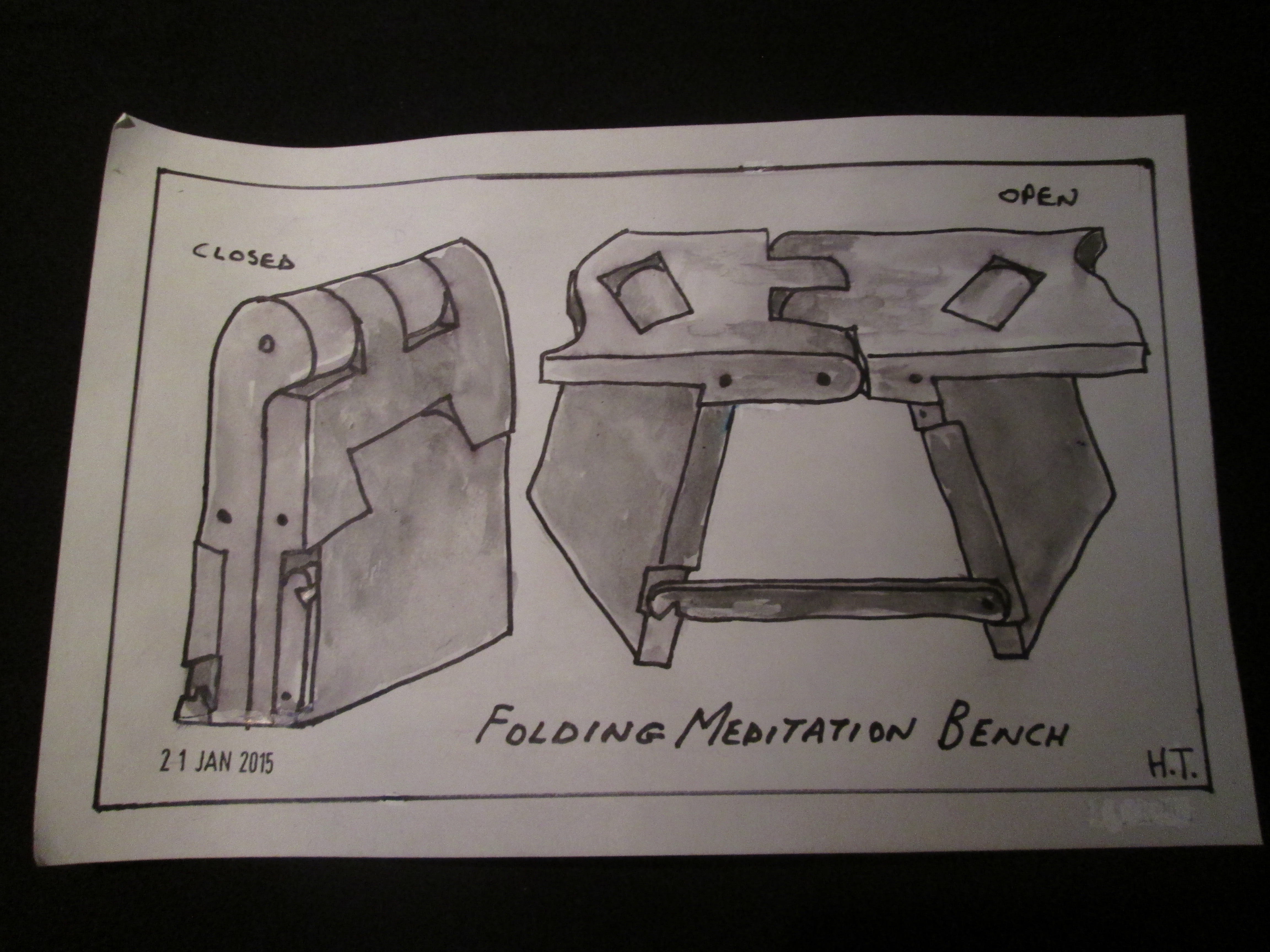
Folding Meditation Bench – Design

Folding Meditation Bench - Design Sketch
Folding Meditation Bench – Design Sketch

I have been designing and manufacturing wooden furniture for a living all of my adult life, although I have add the benefit of having an extensive apprenticeship in my father’s workshop and the guidance of my uncle , both gifted  old-world craftspeople, I have had no formal education in the fields of furniture or industrial design. My learning has been directed by my own curiosity and enjoyment, as well as the harsh reality of efficient production and profit. Over the years I have developed my own methods and strategies, I have seen that many other artists have gone through a similar curve.

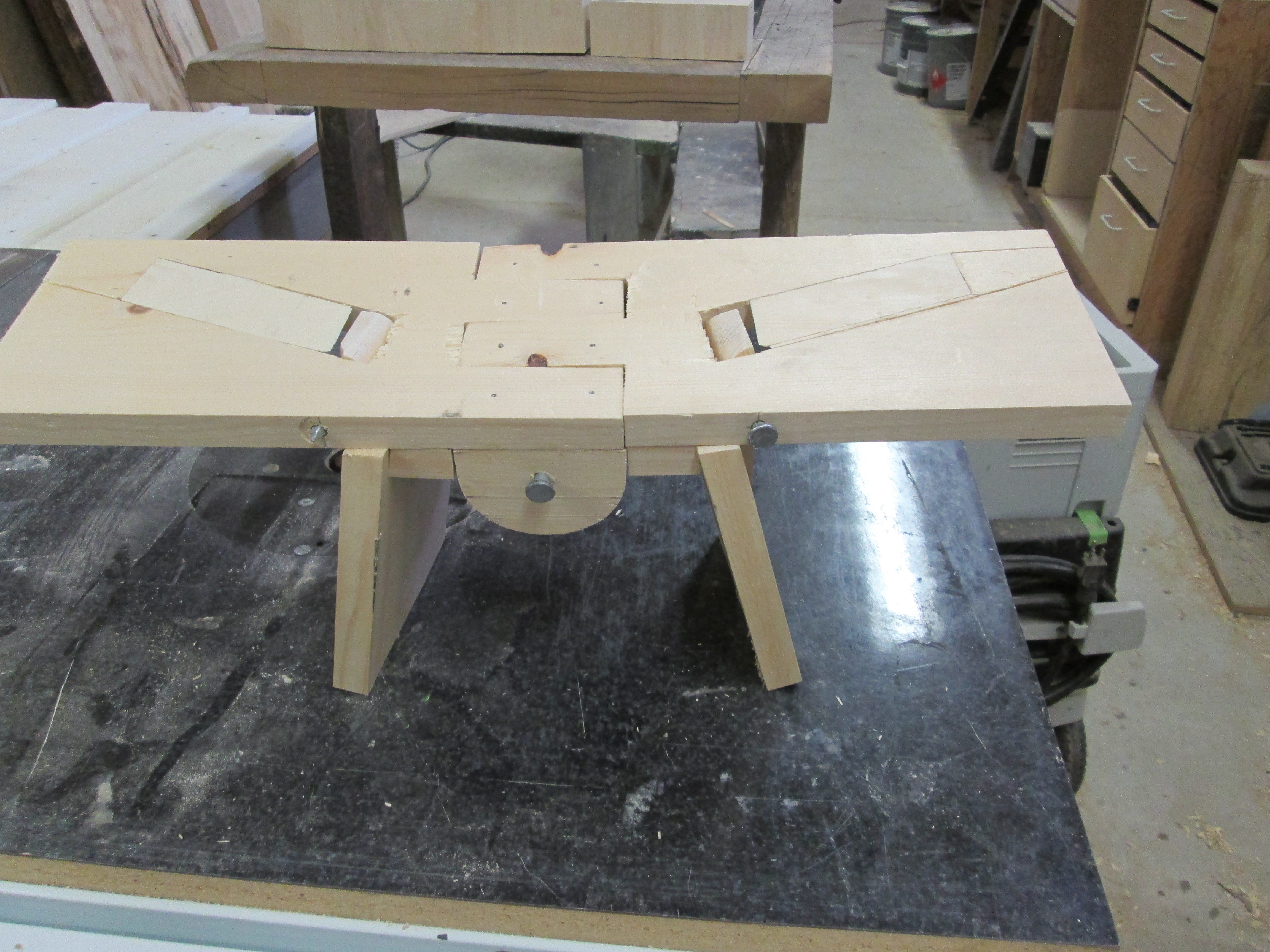
Redesigning the Dharma Bums folding meditation bench from one with metal hinges to a piece made with wooden hinges is the challenge that have I set for myself.  When looking at the original most observers immediately comment that the hinges on the seat surface and look like they will interfere with the sitting comfort, which they don’t, because they are situated so centrally in the seat. However I am convinced that having a folding bench in which the working parts are all made of wood will enhance its craft-skill appeal and exclusivity while maintaining its functional integrity.

Dharma Bums Stool - open
Dharma Bums Stool – open

This is how I basically approach my design process.  Firstly and most importantly, I listen. People are at the centre of any creative process whether it is to expose or serve them. When working with a client I try to make an assessment of their “taste”, I have found that seeing them in their private environment is the best way to get this sense of what they like. When I am not working on something that is commissioned I will still involve people whose ‘eye’ I respect in a dialogue about what I am creating.  I bear in mind that I am aiming to put my hands at the service of the connoisseur.

Secondly I take in as much existing visual information as possible, depending on the rate at which I need to process the work, some visualisations are ongoing some have to be finalised within hours. Best is to see and touch actual objects, i.e. the best way to design a chair is to be with chairs, to check for both functionality and aesthetic by being in their cellular presence. I try to look as many hard copies as possible contemplating the ones that stimulate my attention, books sink in well with me, a contained internet browse is also useful to see what is trending, I have heard this being called; filling the well.

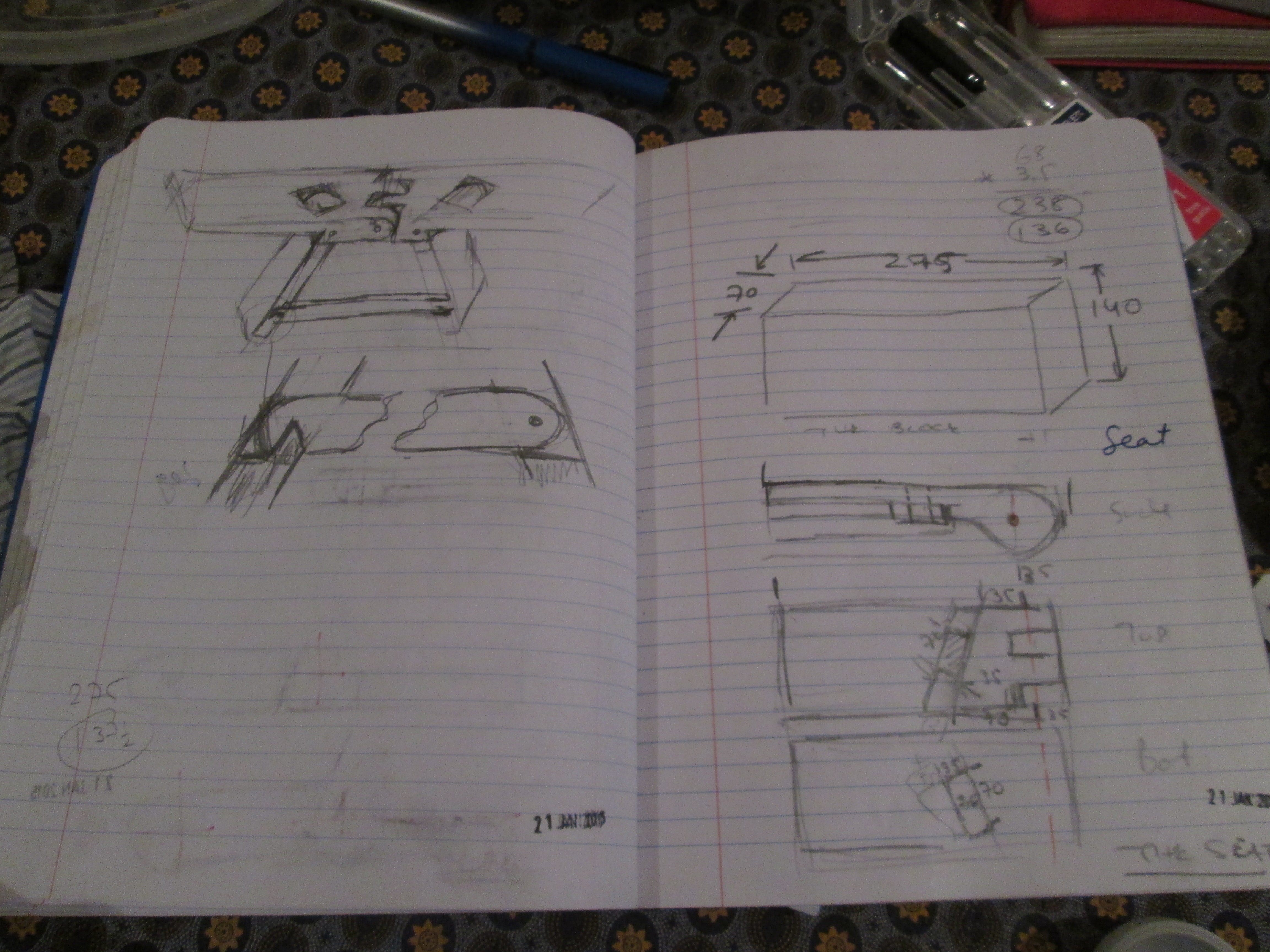
I clear my mind and make a quiet space for the last stage of my design process. I use rough sketches to think my way through and develop ideas and design, I consider how and with what materials the final product will be constructed, I try not to let this limit my creativity, usually there are many elements of balance and compromise. Once I am happy with the concept I make an appealing drawing. This drawing can and often does change but it allows me to put it to rest until, the next phase which will be layouts or re-drawing.

thinking sketches
thinking sketches

This meditation bench that I am busy with is a ‘heart’ project, so I have had the luxury of contemplating it at length, I have seen what is available, touched and used different ones, and nurtured my own design. Next I will enter the period of manifestation.

Folding Meditation Bench – Design